
Feel free to get in touch with us if you need any help! We’ll be happy to assist you.
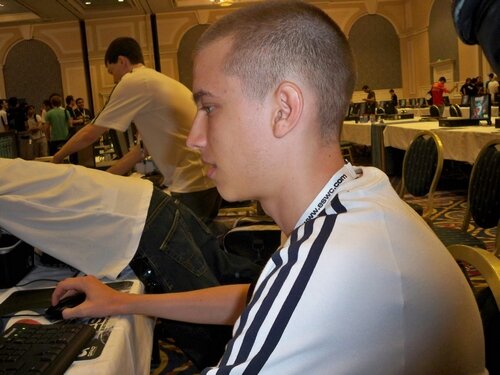
The History of Nikolay Belyakov, Also Known as Azen
Nikolay Belyakov, also listed in some esports records as Nikola Belyakov or Nikolai Belyakov, is a former Russian competitive DotA and Dota 2 player known by the nickname Azen. He competed during one of the most important periods in the history of professional Dota, when the scene was moving from the original Defense of the Ancients mod into Valve’s standalone Dota 2.
For newer Dota 2 fans, names like Puppey, KuroKy and Virtus.pro are instantly recognizable. But before Dota 2 became the global esport it is today, there was a much smaller and more chaotic professional scene built around the Warcraft III DotA mod. Azen was part of that early generation.
His career included teams such as New World Order, GosuGamers.net, Virtus.pro and The Retry. He also competed during the first years of Dota 2, including the period around The International 2011 and The International 2012 qualification cycle.
Early DotA Career
Before Dota 2 existed, competitive DotA was played as a custom map inside Warcraft III. The game already had a serious competitive scene, but it was very different from modern esports. There were fewer sponsors, smaller prize pools, less infrastructure and far less public attention.
Players from that era had to develop their skills mostly through practice, scrims and tournament experience. There were no large coaching staffs, no advanced replay tools like today and no huge esports ecosystem supporting every step of a professional player’s career.
Azen played during this old-school period of DotA, when many of the players who later became Dota 2 legends were still building their names. This makes his career interesting not only as a player biography, but also as a small piece of Dota history.
New World Order and the Early European Scene
One of the most notable parts of Nikolay Belyakov’s career was his time with New World Order, often shortened to NWO. The team included several names that later became extremely well known in the Dota community.
The New World Order lineup included players such as:
- Azen
- KuroKy
- Puppey
- Pajkatt
- Mirakel
Looking back, this roster feels almost unreal because of how many recognizable names were connected to it. Puppey and KuroKy would later become two of the most successful and respected players in Dota 2 history.
During this period, New World Order competed against some of the strongest DotA teams in the world. The team finished second at The DotA Razer Global Challenge, which was a strong result in the pre-Dota 2 era.
From NWO to GosuGamers.net
The New World Order roster later became connected with GosuGamers.net, another name that old Dota fans will remember clearly. GosuGamers was not just a team name, but also one of the most important esports websites for following early competitive Dota.
Historical player listings described Azen as a flexible player who could perform in roles such as semi-carry, carry and solo. This kind of versatility was valuable in early DotA and early Dota 2 because teams often had to adapt quickly to different opponents, drafts and tournament conditions.
Compared to today’s highly specialized roles, the early professional scene often required players to be more flexible. A player who could handle multiple core roles gave his team more options during drafts and roster changes.
The Transition From DotA to Dota 2
The release of Dota 2 changed everything. Valve brought the game into a new era with better visuals, matchmaking, spectator tools and official tournament support. But for players from the original DotA era, the transition was not automatic.
Some players adapted quickly. Some struggled. Others left the scene entirely. The move from Warcraft III DotA to Dota 2 was not just a graphics update. The timing, mechanics, interface and professional structure all changed.
Azen continued competing during this transition period, making him part of the bridge between classic DotA and modern Dota 2.
The International 2011
One of the most important milestones in Azen’s career was his appearance at The International 2011. This was the first edition of Valve’s world championship for Dota 2 and one of the most important tournaments in esports history.
At the time, The International shocked the gaming world with a massive prize pool. For many people, this was the moment when Dota 2 became impossible to ignore.
Azen competed at The International 2011 as part of the GosuGamers.net roster. The team finished among the top sixteen participants at the event.
Today, simply being listed as a player from the first International gives a competitor a special place in Dota 2 history. The first TI was not just another tournament. It was the beginning of the biggest annual tradition in Dota 2.
Virtus.pro and the 2012 Period
In 2012, Nikolay Belyakov joined Virtus.pro, one of the most famous esports organizations in the CIS region. Virtus.pro has always had a strong connection to Dota, and joining the organization was an important step in Azen’s career.
The Virtus.pro lineup from that period included names such as:
- Azen
- NS
- Dread
- Santa
- KuroKy
This roster competed during the qualification stage surrounding The International 2012. The period was intense for many CIS and European teams because Dota 2 was becoming more serious, more competitive and more visible to fans around the world.
Virtus.pro’s Dota history is long, and Azen’s time with the organization belongs to the early Dota 2 chapter of that story.
The Retry and Later Competitive Records
After his time with Virtus.pro, Azen also appeared in records for The Retry. His name is connected with competitions such as StarLadder ProSeries Season 7, which was part of the growing tournament ecosystem around Dota 2.
By this point, the professional scene had started to change quickly. Teams were becoming more organized, Dota 2 was attracting more players, and the gap between casual players and professionals was becoming much larger.
The early pioneers of the scene had already helped build the foundation that later generations would compete on.
Playing Style and Roles
Azen was associated with core roles such as carry, semi-carry and solo. These roles require strong mechanical skill, map awareness and an understanding of farming patterns, item timings and team fight execution.
In early Dota, role definitions were often less rigid than they are today. Teams experimented more often, and players had to understand the game from multiple angles.
A player who could perform in several roles was valuable because it allowed the team to adjust strategies without completely changing the roster.
Why Nikolay Belyakov Matters in Dota 2 History
Not every important Dota player became a modern superstar, streamer or team captain. Some players are important because they were part of the early competitive ecosystem that allowed the game to grow.
Nikolay Belyakov, known as Azen, was one of the players active during the transition from DotA to Dota 2. He played with and against people who later became central figures in the game’s history.
His connection to New World Order, GosuGamers.net, Virtus.pro, The Retry and The International 2011 makes his career worth remembering for anyone interested in old-school Dota and early Dota 2 esports.
Nikolay Belyakov, also known as Azen, represents the early generation of Dota players who competed before Dota 2 became one of the biggest esports in the world.
Final Thoughts
The story of Nikolay Belyakov is also the story of early competitive Dota. Before the huge arenas, massive prize pools and global broadcasts, there were players competing in a smaller but very passionate scene.
Azen’s career connects several important parts of that history: the original DotA era, the move to Dota 2, The International 2011, Virtus.pro and the early CIS and European professional scene.
For fans who enjoy learning about the roots of Dota 2, Nikolay Belyakov is a name worth knowing.